
Effective commercial office design has evolved far beyond fitting as many desks into a floor plan. Today, the focus has shifted toward intentional environments that optimize how modern teams actually move and collaborate.
After all, a well-planned layout acts as a silent partner in your productivity, removing friction from the workday. When you prioritize the flow of people over the number of seats, you create a space that feels both spacious and purposeful.
In this guide, we will explore practical strategies to maximize your footprint and improve efficiency. You will learn how to evaluate your space, create functional zones, and select furniture that grows alongside your business.
Evaluate How the Space Will Be Used
Optimizing a workspace starts with understanding the unique daily rhythm of the office. After all, a successful commercial office design isn't one-size-fits-all; it must be tailored to the specific industry and the technical needs of the company.
As you build your floor plan, consider evaluating the space based on the following:
- Identify Dead Zones: Look for awkward corners or windowless areas that could be repurposed for storage, phone booths, or server housing.
- Map Ideal Traffic Paths: Plan logical routes between high-traffic spots like the breakroom and printer stations to prevent cross-office disruption.
- Analyze Industry Requirements: Consider whether the space will require high-density data processing areas, open creative studios, private consultation rooms, or a mix of different types of work zones.
- Factor in Growth Projections: Evaluate how many additional headcounts the current square footage can comfortably support over the next three to five years.
- Align Materials with Function: Choose commercial flooring choices, furniture, and wall systems based on specific needs. For instance, such as using high-durability vinyl flooring for cafeterias or acoustic-dampening finishes for quiet zones.
Create Specific Zones for Focus and Collaboration
Modern commercial office design thrives on variety. By creating dedicated work zones, you allow employees to choose the environment that best suits their current task.
Strategic zoning helps minimize distractions while maximizing the utility of your square footage. This approach ensures that high-energy collaborative sessions don’t interfere with those who need deep, quiet focus.
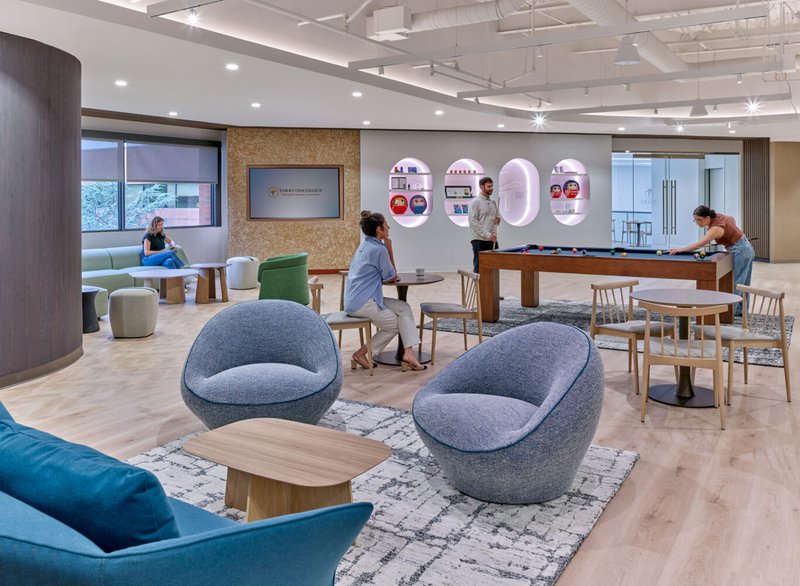
To create a balanced ecosystem, consider incorporating these essential zones:
- Huddle and Meeting Rooms: Small, tech-equipped spaces are perfect for quick brainstorms or private calls without tying up a large boardroom.
- Common Areas and Cafeterias: These casual spots encourage natural conversations and informal knowledge sharing between different departments.
- Focus Hubs: Quiet zones with ergonomic seating provide a sanctuary for deep work away from the buzz of the main office.
- Ancillary Social Spaces: Comfortable lounge areas can serve as both a reception for guests and a secondary workspace for employees.
When you designate specific areas for different activities, the entire office runs more smoothly. This structure helps maintain a high level of efficiency while keeping the team engaged and comfortable.
Build Flexibility Into the Commercial Office Design
A truly efficient workspace must be able to adapt as your business grows or your workflow changes. Traditional drywall is often a permanent and costly barrier to future renovations or layout adjustments.
By utilizing modular infrastructure, you can reconfigure your floor plan without the mess and downtime of traditional construction.
Consider leveraging these elements to ensure a smart and flexible commercial office design:
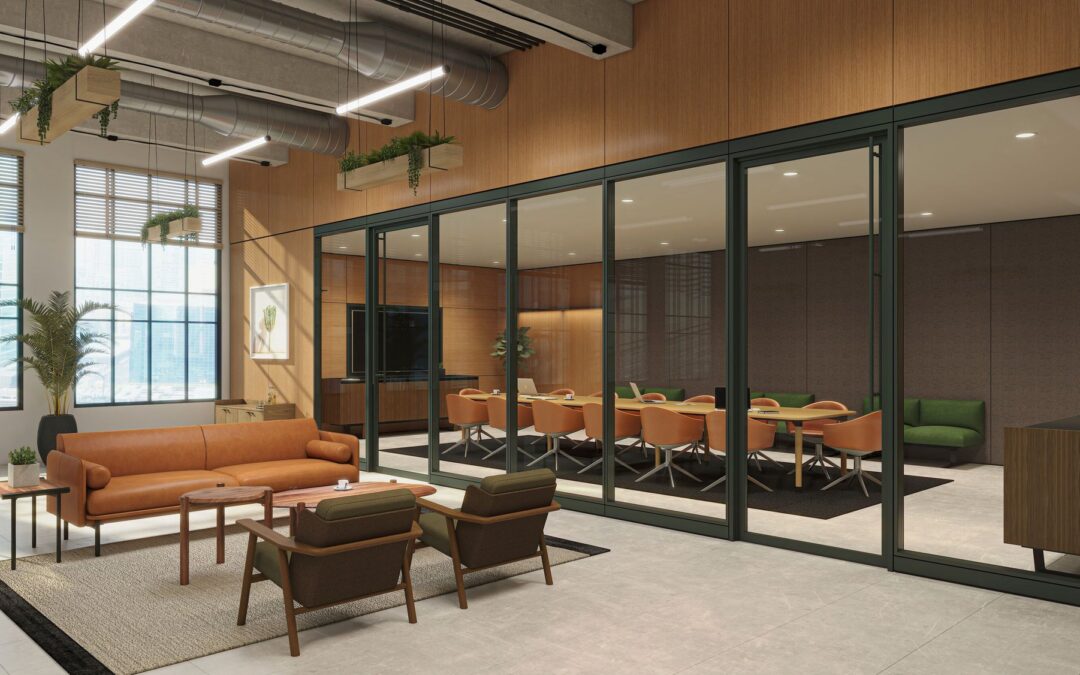
- Demountable Walls: Demountable wall systems provide the privacy of a permanent room but can be moved or repurposed as your team's needs shift. This lets you turn private offices to open collaborative spaces in a matter of days instead of months.
- Glass Fronts: Using glass allows natural light to penetrate deep into the office while maintaining acoustic privacy for meetings.
- Solid System Walls: These provide a clean, modern look for private areas and can often be integrated with technology or storage.
- Acoustic Management: Solutions like sound masking and fabric tackboards ensure that a flexible office remains a quiet and productive one.
Investing in an adaptable infrastructure saves money and resources in the long run. It ensures that your office remains a functional asset, no matter how much your team scales or changes direction.
Select Future-Proof Furniture
The final layer of a productive workspace is the physical furniture that supports your daily tasks. Choosing pieces that offer modularity ensures your commercial office design remains relevant even as your headcount fluctuates.
Investing in high-quality, adjustable solutions prevents the need for frequent replacements. When your furniture is designed to be reconfigured, you can easily transition from individual workstations to collaborative group benches.
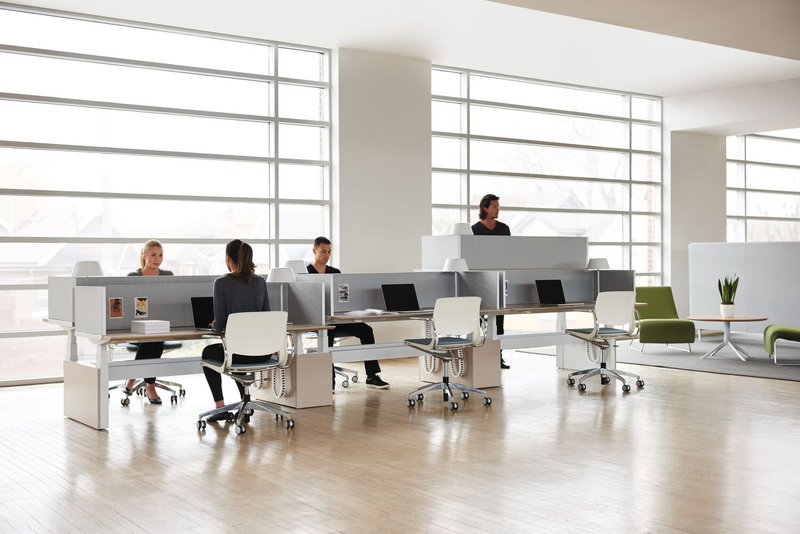
Consider these factors when selecting your office pieces:
- Scalable Workstations: Look for systems that can be expanded or linked together as you hire more staff.
- Ergonomic Excellence: Prioritize task chairs and height-adjustable desks that support employee health and long-term focus.
- Ancillary Versatility: Select lounge and common area pieces that are lightweight and easy to move for different types of gatherings.
- Uniform Aesthetics: Sticking to a consistent design language makes it easier to mix and match pieces across different departments.
Selecting the right commercial furniture is about more than just aesthetics; it is about creating a durable foundation for growth. This strategic selection process ensures your environment stays functional and professional for years to come.
Partner With Us for Your Commercial Office Design
Maximizing efficiency in your workplace is an ongoing journey that begins with intentional planning. By evaluating your needs and building in flexibility, you create a space that supports both your people and your bottom line.
If you’re looking for commercial office design solutions that work for your specific needs, get in touch with us at Innovative Commercial Interiors. Our team would love to help you get started.